
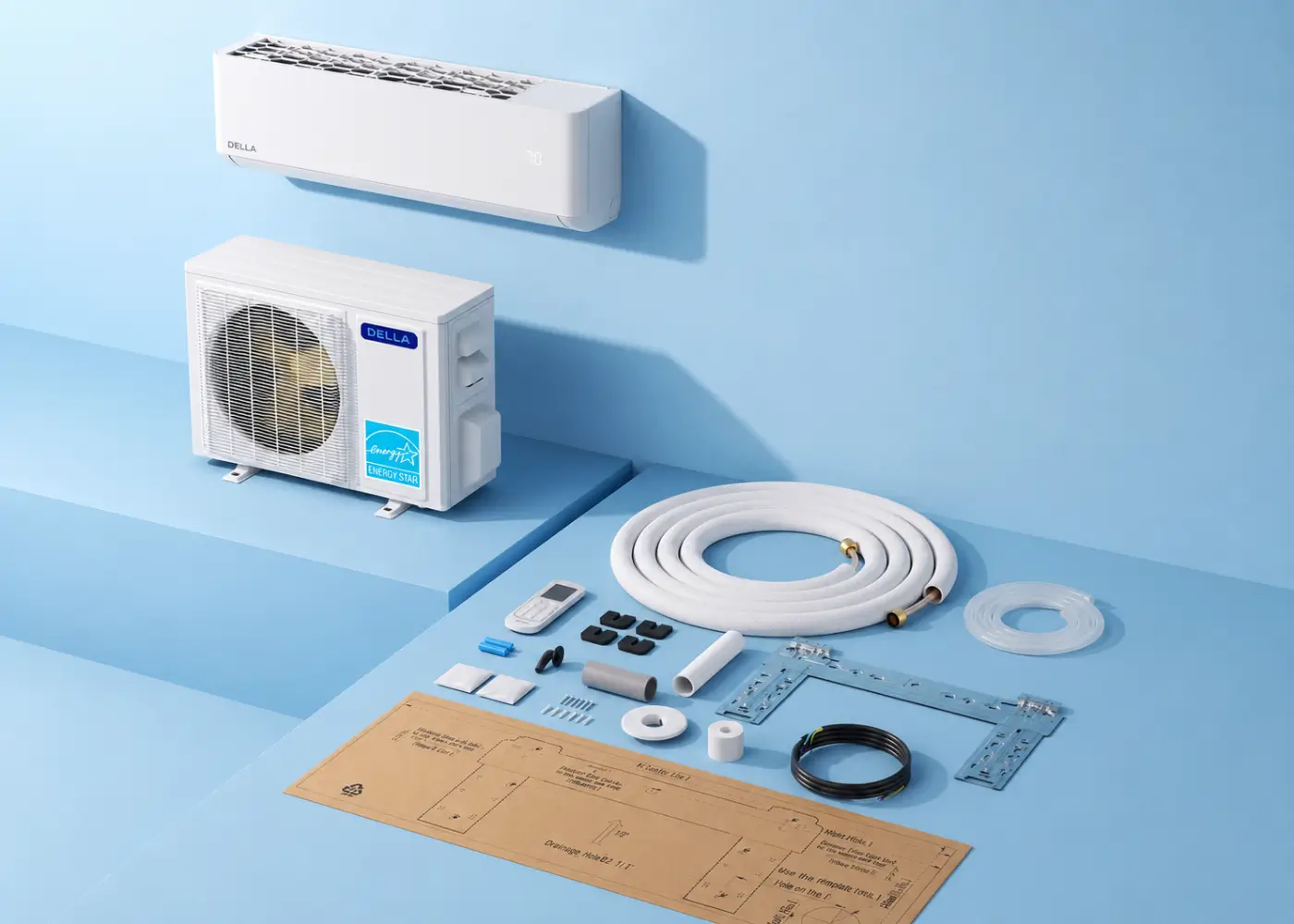
Choosing the correct HVAC line set size is an important part of installing an efficient heating and cooling system. Whether you are replacing an existing air conditioner, installing a new heat pump, or upgrading your home’s HVAC equipment, selecting the appropriate refrigerant line dimensions can directly affect system performance, energy efficiency, and long-term reliability. Understanding how HVAC line sets work and what factors determine their sizes can help homeowners and HVAC professionals make informed installation decisions.
An HVAC line set consists of two copper refrigerant pipes that connect the indoor evaporator coil to the outdoor condenser or heat pump. These pipes serve different purposes within the refrigeration cycle. The larger pipe is generally called the suction line, which carries low-pressure refrigerant vapor back to the compressor. The smaller pipe is known as the liquid line, which transports high-pressure liquid refrigerant from the outdoor unit to the indoor coil. Both lines are essential for maintaining proper refrigerant circulation and effective temperature control.
Common HVAC line set sizes vary depending on the equipment capacity, manufacturer specifications, and system design. Residential air conditioning systems frequently use copper tubing with suction line diameters ranging from 3/8 inch to 1-1/8 inches, while liquid lines commonly range from 1/4 inch to 3/8 inch. Smaller systems may require narrower tubing, whereas larger systems generally need larger refrigerant lines to accommodate increased refrigerant flow. However, these dimensions are general examples rather than universal sizing standards.
One of the most important factors when selecting a line set is the cooling capacity of the HVAC system. Equipment capacity is typically measured in tons or BTUs per hour. A smaller one-ton air conditioner may require different refrigerant piping dimensions than a three-ton or five-ton system. However, capacity alone does not determine the correct size. Manufacturers also consider refrigerant type, compressor characteristics, piping length, elevation differences, and operating conditions when establishing acceptable line dimensions.
Line set length is another important consideration. Longer refrigerant lines create additional pressure drops and can affect overall system efficiency. If the piping exceeds the manufacturer’s recommended length, additional installation requirements may apply. Vertical distance between indoor and outdoor equipment can also influence refrigerant return and system performance. Proper installation practices, including insulation, secure connections, and appropriate refrigerant charging, help prevent unnecessary energy losses.
Using an incorrectly sized HVAC line set can lead to several operational problems. Undersized suction lines may increase refrigerant pressure losses, while oversized piping can affect refrigerant velocity and oil return. Incorrect liquid line dimensions may also interfere with proper refrigerant delivery. These issues can contribute to reduced cooling performance, increased electricity consumption, compressor stress, and premature equipment failure.
Before purchasing a replacement line set, always check the HVAC manufacturer’s installation manual and equipment specifications. Never assume that an existing line set is suitable simply because it was connected to an older system. Different refrigerants and equipment models may have different piping requirements. A qualified HVAC technician can verify the appropriate dimensions and inspect existing copper lines for damage, contamination, or compatibility concerns.
Ultimately, selecting the right HVAC line set size is essential for achieving reliable cooling, maintaining energy efficiency, and protecting expensive HVAC components. By following manufacturer guidelines and considering equipment capacity, piping distance, and installation conditions, homeowners can ensure their air conditioning systems operate safely and efficiently for years to come.
