
Ayurveda has been a trusted system of wellness for thousands of years, emphasizing natural ingredients and holistic approaches to health and beauty. In recent years, Ayurvedic skincare products have gained widespread popularity as consumers increasingly seek gentle, plant-based alternatives to conventional cosmetic formulations. These products often focus on nourishing the skin, maintaining balance, and supporting long-term skin health rather than offering quick fixes.
An Ayurvedic face cream typically contains a blend of carefully selected herbs, botanical extracts, natural oils, and traditional ingredients that work together to hydrate, soothe, and protect the skin. These formulations are often inspired by centuries of Ayurvedic wisdom and are designed to suit a variety of skin concerns.
Many people searching for the best face moisturizer for dry skin in India are drawn to Ayurvedic formulations because of their reputation for deep nourishment and skin-friendly ingredients. Understanding the key herbs commonly found in these creams can help consumers make informed skincare choices.
Each ingredient contributes unique properties that support healthy, balanced, and radiant skin.
Why Herbal Ingredients Are Important in Ayurveda
Ayurveda views skincare as an extension of overall wellness.
Rather than relying solely on synthetic ingredients, Ayurvedic formulations often incorporate herbs known for their traditional benefits.
These herbal ingredients may help support:
- Skin hydration
- Barrier function
- Skin comfort
- Healthy appearance
- Overall skin balance
The goal is to nourish the skin while respecting its natural functions.
Many herbs used in Ayurvedic skincare have been valued for generations and continue to play a significant role in modern formulations.
Their enduring popularity reflects their versatility and compatibility with a wide range of skin types.
Kumkumadi: The Traditional Beauty Ingredient
Kumkumadi is one of the most celebrated ingredients in Ayurvedic skincare.
Traditionally prepared using saffron and a blend of herbal extracts, it is often included in creams designed to support skin radiance and overall complexion health.
Potential benefits associated with Kumkumadi-based formulations include:
- Improved skin nourishment
- Enhanced skin softness
- Support for a healthy glow
- Better hydration
Because of its long history of use, Kumkumadi remains a sought-after ingredient in premium Ayurvedic skincare products.
Many consumers associate it with luxurious and rejuvenating skincare rituals.
Its popularity continues to grow among individuals seeking traditional beauty solutions.
Aloe Vera: A Natural Hydration Booster
Aloe vera is widely recognized for its soothing and moisturizing properties.
In Ayurvedic creams, aloe vera is commonly included to support:
- Skin hydration
- Moisture retention
- Skin comfort
- Cooling effects
Its lightweight nature makes it suitable for many skin types, including sensitive and combination skin.
Aloe vera can help create a balanced formulation by providing hydration without feeling overly heavy.
This versatility has made it one of the most commonly used botanical ingredients in modern skincare products.
Its reputation for gentle care contributes significantly to its popularity.
Sandalwood: A Timeless Ayurvedic Ingredient
Sandalwood has been used in Ayurvedic beauty practices for centuries.
Traditionally valued for its calming and cooling properties, sandalwood is often incorporated into face creams and skincare formulations.
Benefits commonly associated with sandalwood include:
- Supporting skin comfort
- Providing a soothing sensation
- Enhancing skincare rituals
- Promoting a refreshed appearance
Its distinctive aroma also contributes to the sensory experience of using Ayurvedic skincare products.
Many people appreciate sandalwood for both its skincare qualities and its connection to traditional wellness practices.
Its enduring presence reflects its importance within Ayurvedic beauty traditions.
Turmeric: The Golden Herb of Ayurveda
Turmeric occupies a special place in Ayurvedic skincare and wellness.
Known for its vibrant golden color, turmeric has traditionally been included in beauty rituals focused on maintaining healthy-looking skin.
Turmeric-based skincare products may help support:
- Skin nourishment
- Overall skin wellness
- A healthy complexion
- Balanced skincare routines
Its longstanding role in Ayurvedic traditions has made it one of the most recognizable herbal ingredients worldwide.
Many consumers seek turmeric-infused products as part of natural skincare routines focused on long-term skin health.
Its versatility allows it to be incorporated into a wide range of formulations.
Neem: Supporting Healthy Skin
Neem is another highly respected herb in Ayurveda.
Traditionally valued for its purifying properties, neem is frequently included in skincare products intended to support balanced and healthy skin.
Neem-containing creams are often chosen for:
- General skin maintenance
- Supporting skin cleanliness
- Promoting skin comfort
- Complementing daily skincare routines
Its widespread use reflects its importance within Ayurvedic herbal traditions.
Neem is commonly combined with other herbs to create formulations that address multiple skincare needs simultaneously.
This adaptability contributes to its enduring popularity.
Manjistha: A Traditional Ayurvedic Botanical
Manjistha has long been used in Ayurvedic wellness practices and is frequently included in skincare formulations.
It is traditionally valued for supporting:
- Skin vitality
- Complexion care
- Skin nourishment
- Overall balance
Many Ayurvedic practitioners regard Manjistha as an important ingredient for maintaining healthy-looking skin.
Its inclusion in face creams reflects the Ayurvedic emphasis on promoting balance and supporting the skin’s natural processes.
Consumers interested in traditional herbal skincare often look for formulations containing this respected botanical.
Licorice Root: A Popular Herbal Addition
Licorice root is increasingly found in Ayurvedic skincare products due to its gentle nature and compatibility with various skin types.
Common reasons for its inclusion include:
- Supporting skin comfort
- Enhancing formulation balance
- Complementing other herbal ingredients
- Contributing to overall skin wellness
Licorice root works well alongside ingredients such as aloe vera, turmeric, and sandalwood.
Its versatility makes it a valuable component of many modern Ayurvedic creams.
The combination of traditional use and contemporary popularity has strengthened its position within herbal skincare.
Natural Oils and Butters in Ayurvedic Creams
In addition to herbs, many Ayurvedic creams include nourishing oils and butters.
These ingredients help support hydration and skin barrier function.
Common examples include:
- Ghee-derived ingredients
- Coconut oil
- Sesame oil
- Almond oil
- Shea butter
These moisturizing components help create rich, nourishing formulations suitable for individuals seeking long-lasting hydration.
They also enhance the texture and application experience of Ayurvedic creams.
A well-balanced formulation often combines herbal extracts with moisturizing ingredients to provide comprehensive skin support.
Choosing the Right Ayurvedic Face Cream
Not every Ayurvedic cream is formulated the same way.
When selecting a product, consider:
- Your skin type
- Ingredient quality
- Brand reputation
- Moisturizing needs
- Sensitivity considerations
Individuals with dry skin may benefit from richer formulations, while those with oily or combination skin may prefer lighter textures.
Reading ingredient lists and understanding the purpose of key herbs can help guide product selection.
Choosing a product aligned with your skin’s needs increases the likelihood of positive results.
Conclusion
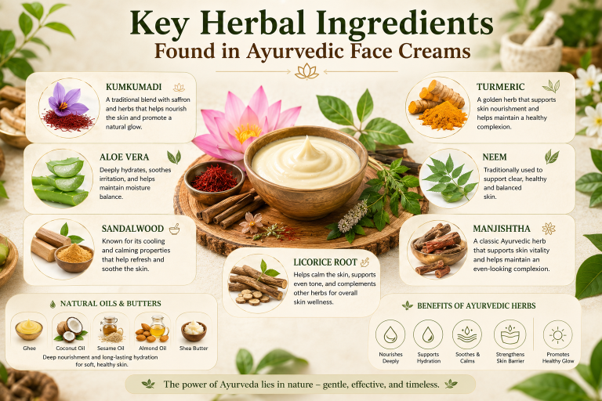
Ayurvedic face creams continue to attract attention because of their thoughtful combination of traditional herbs, natural oils, and holistic skincare principles. Ingredients such as Kumkumadi, aloe vera, sandalwood, turmeric, neem, Manjistha, and licorice root each contribute unique properties that support hydration, nourishment, comfort, and overall skin wellness.
These herbal ingredients reflect Ayurveda’s long-standing philosophy of maintaining balance and supporting the skin’s natural functions. Rather than focusing solely on cosmetic improvements, Ayurvedic skincare aims to promote healthy, resilient skin through consistent care and natural nourishment.
As consumers increasingly seek gentle and plant-based skincare options, understanding the key ingredients found in Ayurvedic creams can help them make informed decisions and build routines that support long-term skin health and radiance.